
Conditions
Headache Arising from the Neck (Cervicogenic)
How our services Can Provide Relief for Cervicogenic Headaches
Ever felt a headache that seems to start at the back of your neck? It’s not just a regular headache—it’s likely a cervicogenic headache, originating from issues within your neck’s vertebrae or soft tissues. This type of headache is stubborn, but our approach at Myoset offers a unique pathway to relief.
Understanding Cervicogenic Headaches
Unlike tension headaches or migraines, cervicogenic headaches are secondary headaches, meaning they stem from another physical issue—specifically, disorders of the neck’s cervical spine. These headaches are often precipitated by neck movement or sustained awkward head positioning, which might sound familiar if you’re working at a desk all day.
The Neck's Role in Headaches
The neck can be a hidden source of headaches due to its complex network of nerves, muscles, and bones. Problems in the cervical spine can trigger pain that radiates to the head and face. Think of it this way: if your neck isn’t happy, your head probably isn’t either.

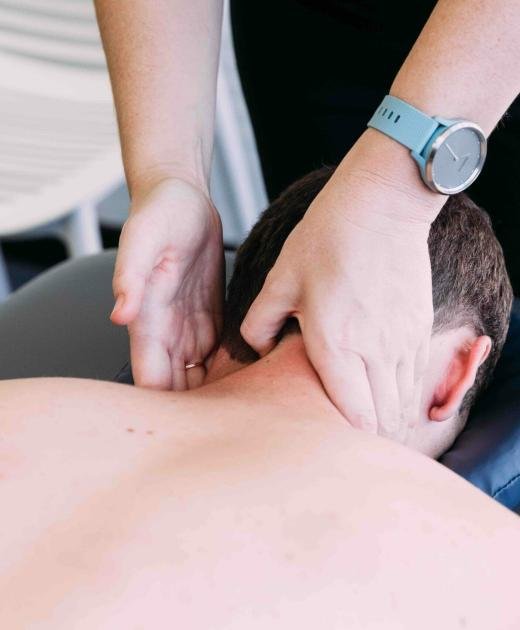
Are you ready to say goodbye to headaches originating from your neck? Don’t let cervicogenic headaches diminish your quality of life. Book a consultation at today, and let us help you achieve a pain-free, active lifestyle with our expert therapist.
Your journey to relief starts with a simple step- Book an appointment now


Booking
Our mission is to provide long-term "once and for all" relief.
We treat ALL musculoskeletal conditions, and confidently believe we can help anyone lead a healthier, comfortable life, free from pain.
FAQ
Can physiotherapy help headaches?
It can, particularly for headaches originating in the neck and upper back. Treating stiff upper neck joints and tight surrounding muscles can reduce the frequency and intensity of these headaches, while posture and strengthening work can help reduce recurrence. Physiotherapy does not treat the underlying neurological mechanism of true migraine, although it can help with neck-related triggers.
What is a cervicogenic headache?
A cervicogenic headache is a headache referred from structures in the neck, usually the upper cervical joints. It typically starts at the base of the skull and spreads forward over one side of the head. It is often one-sided and can be provoked by neck position or movement. Neck stiffness and tenderness usually accompany it.
How do I know if my headache is coming from my neck?
Neck-related headaches tend to be one-sided, start at the base of the skull, worsen with sustained neck postures such as desk work or driving, and come with neck stiffness or restricted movement. A physiotherapist can often reproduce or ease the headache by testing specific upper neck joints, which can help identify a neck-related cause.
Can desk work cause headaches?
Yes. Long periods at a screen can place sustained load on the upper neck and shoulder muscles. This combination of joint stiffness and muscle tension is a common source of headaches. This is particularly relevant for people working at desks in Canary Wharf. Desk setup changes and specific strengthening exercises can form part of the treatment plan.
What is the difference between a headache and a migraine?
Migraine is a neurological condition that typically causes moderate to severe, often one-sided throbbing pain with nausea and sensitivity to light or sound. Some people also experience visual aura, and attacks can last for hours or days. Tension-type and neck-related headaches are usually steadier pressing or aching pains without these neurological features.
How many sessions does headache treatment take?
The number of sessions varies depending on what is causing the headache and how long it has been present. Your Myoset physiotherapist or osteopath can provide an estimate during the initial assessment and review your progress throughout treatment. Where posture contributes to headaches, strengthening and exercise can be particularly important for preventing them from returning.
When should a headache be checked by a doctor?
Seek urgent medical assessment for a headache that comes on suddenly and severely, follows a head injury, or occurs with fever, neck stiffness, rash, weakness, confusion, visual loss, or difficulty speaking. You should also speak to a GP if your headache pattern changes or you develop a new type of headache after the age of 50.